Carbon Monoxide Safety

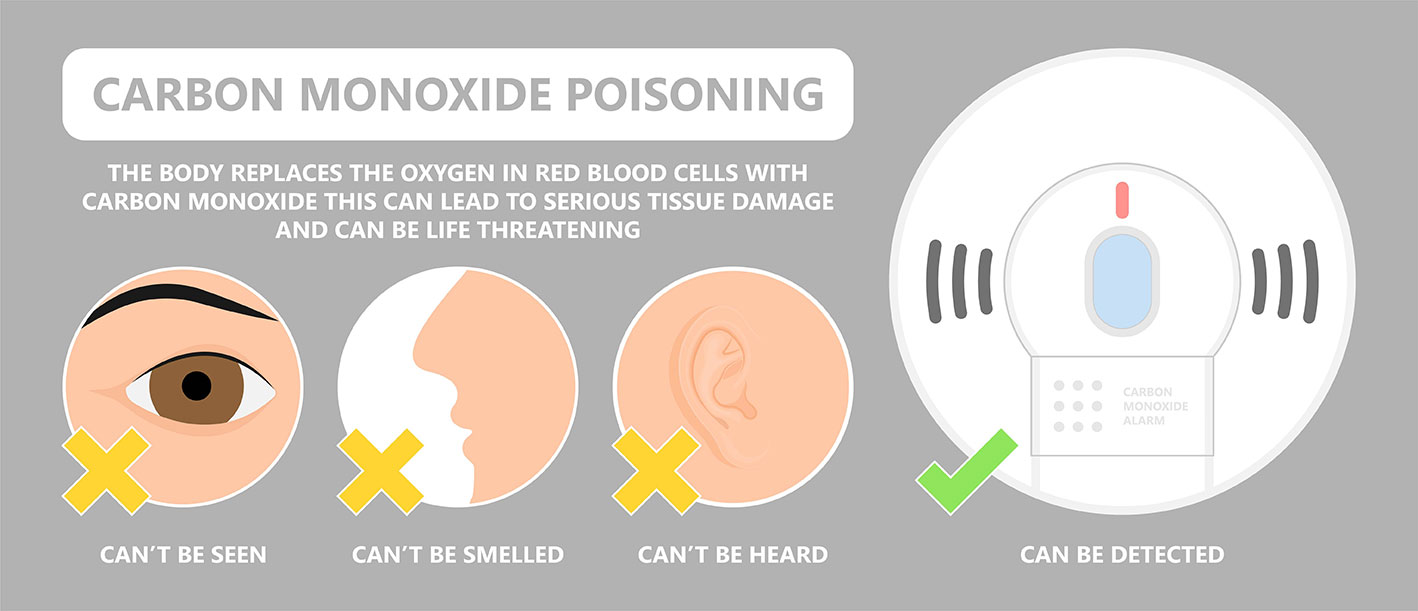
Carbon monoxide (CO) is called the “silent killer” because it is a dangerous gas you can’t see, smell, or taste, making it impossible to detect without a working CO alarm. Most CO deaths and injuries occur in homes. Having a working CO alarm in your home is the surest way to know you and your family are protected.


New Ontario Fire Code changes as of January 1, 2026

Homes with fuel-burning appliances, fireplaces, or attached garages will now be required to have carbon monoxide (CO) alarms installed on every storey, including floors without sleeping areas. These updates are designed to provide earlier warning and stronger protection for residents. 

CO enters the body when you breathe and can poison you. High levels can be fatal, causing death within minutes. Symptoms include shortness of breath, headaches, nausea, dizziness, confusion, drowsiness, loss of consciousness and death.

If the carbon monoxide alarm sounds:

  • Leave your home immediately and move to fresh air
  • Do not try to locate the source of carbon monoxide
  • Once outside, call 9-1-1
  • Return to your home only after the problem has been fixed by a professional
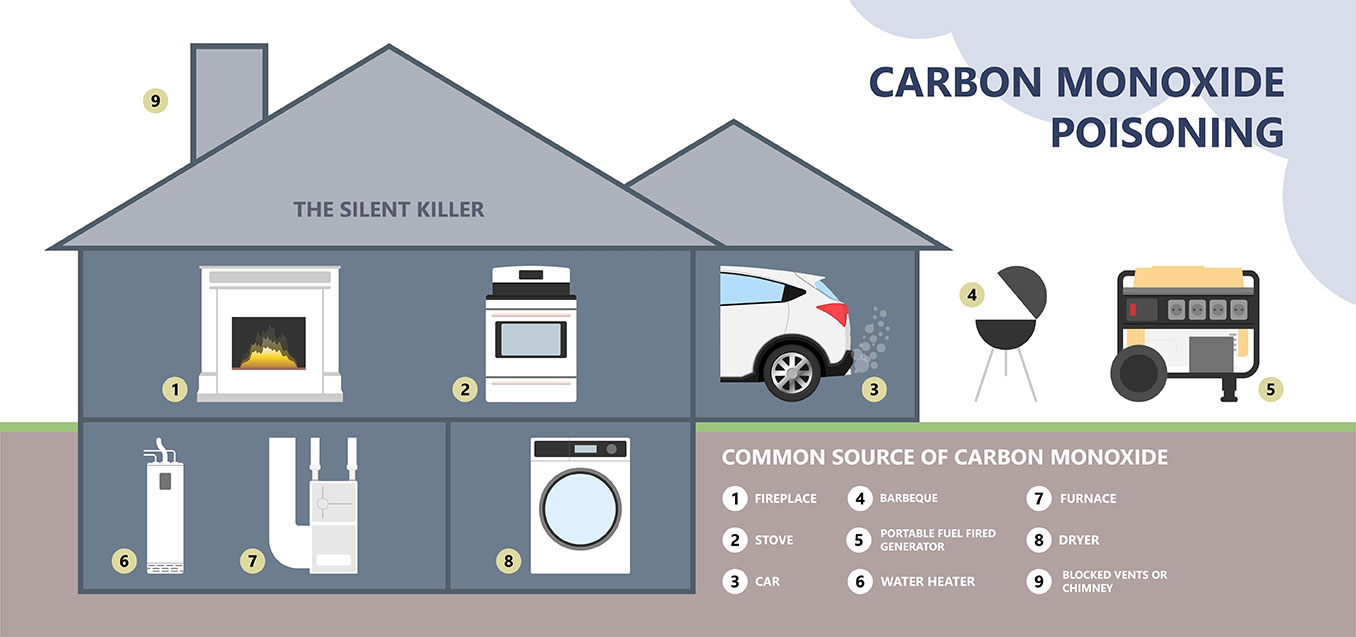
Most households have an average of four to six fuel-burning appliances that produce carbon monoxide. Never use a portable fuel-burning appliance inside your house or garage (such as barbeques, portable heaters and generators). Don’t leave your car, lawnmower, snowblower, ATV or other gas-powered engine running in your garage, even if the garage door is open.

  • Barbeques
  • Dryers
  • Generators
  • Fireplaces
  • Furnaces
  • Hot water heaters and portable heaters
  • Stoves
  • Vehicle exhaust

Have your appliances checked by a professional

If your appliances are not maintained properly, if their vents get damaged or blocked, or if there isn’t enough airflow, dangerous levels of CO can build up inside your home, garage, or any enclosed space. Have a trained, TSSA-certified technician check your furnace, gas, stove, fireplace, fuel-burning appliances and vents yearly.

Visit COsafety.ca to find a registered contractor near you.

Carbon monoxide alarms in your living area - it's the law!

  • Install alarms according to the manufacturer’s instructions and replace the entire alarm when it reaches end-of-life (typically every 5 to 10 years)
  • Test your alarms once a month. Change the batteries at least once per year.
  • For the best protection, interconnect all CO alarms throughout the home so that when one sounds, they all sound
  • Buy certified alarms: Choose alarms certified by CSA, ULC, ETL, or other recognized agencies. This indicates that it has been tested and meets safety standards.

Alarms in your house, apartment, condo or multi-unit building

The Ontario Fire Code requires carbon monoxide (CO) alarms on every floor of homes and buildings with a fuel-burning appliance, fireplace, or attached garage. 

  • Expanded coverage: CO alarms will be required on every floor of all homes that have a fuel-burning appliance, fireplace, or attached garage, not just near sleeping areas
  • Sleeping area requirement: A CO alarm must be installed next to each sleeping area in the home
  • Fuel-burning appliance: The rule also covers homes that are heated by air from a fuel-burning appliance (e.g., a gas hot water tank or furnace) located outside the main residence, such as a furnace in a separate utility room or outbuilding
  • Multi-unit dwellings: CO requirements also apply to apartments, condos, and other multi-unit buildings. This includes public corridors if there are fuel-burning systems present.

Landlords (rental units)

  • Must ensure CO alarms are installed according to the updated regulations, including adjacent to sleeping areas and on every storey where required
  • Must maintain CO alarms, test them annually (or during key moments such as battery replacement or tenant turnover), and provide tenants with maintenance instructions

Tenants

  • Must report non-working or damaged alarms to their landlord as soon as possible
  • It is against the law for tenants to remove the batteries or tamper with CO alarms
  • If the landlord does not provide working carbon monoxide alarms, call the Fire Department, and a Fire Inspector will attend

Your CO alarm sounds different than your smoke alarm. Test both alarms monthly and ensure everyone in your home knows the difference between the sounds.

  • Know the difference between the low-battery warning, the “end-of-life” warning, and the emergency alarm alerting you to the presence of CO in your home
  • A continuous set of four loud beeps - beep, beep, beep, beep - means carbon monoxide is present. Go outside, call 911, and stay out
  • A single chirp every 30 or 60 seconds means the battery is low and must be replaced
  • Chirping that continues after the battery has been replaced means the alarm is at the end of its life, and the unit must be replaced. This sound can vary by manufacturer.

Contact Us

City of Niagara Falls Fire Department
5809 Morrison Street
Niagara Falls, ON  L2E 2E8
Canada
905-356-7521
Fire Services Contact Form
Email Fire Services